The Code (IBC/NFPA)
When Is an Elevator Smoke Curtain Required by Code? (IBC 3006.2 Guide)
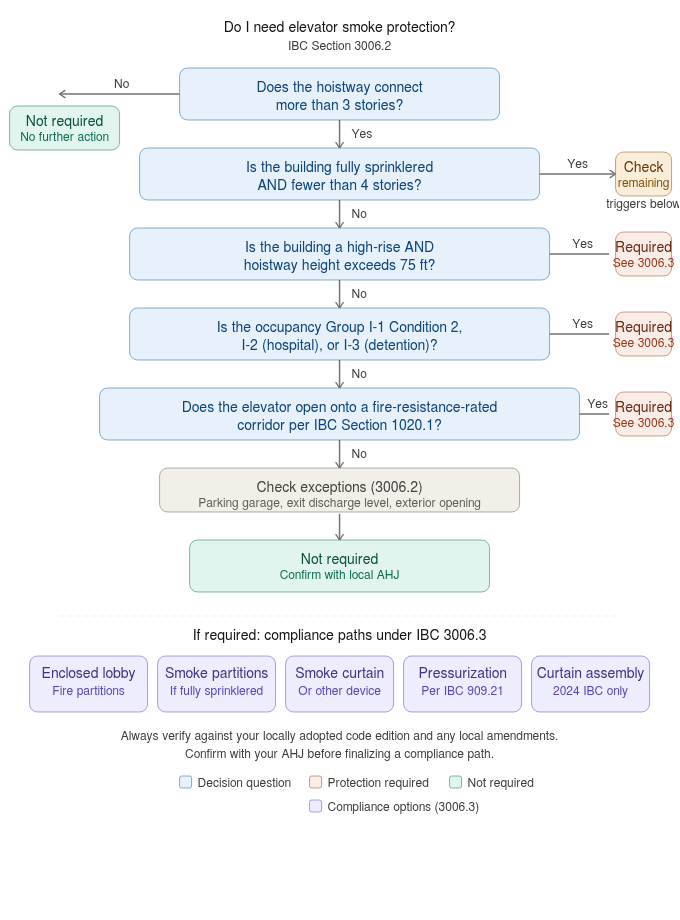
Failing to plan for elevator smoke protection is a $20,000 mistake. We break down the three main triggers of IBC 3006.2 and the five ways to stay compliant without losing square footage.
Quick Answer: Under IBC Section 3006.2, elevator smoke protection is required when a hoistway opens into a fire-resistance-rated corridor, connects four or more stories, or is located in occupancy types like I-2 (hospitals). While there are five ways to comply, an automatic smoke curtain is often the most cost-effective for maintaining open floor plans.
Most architects I talk to think I’m just trying to sell them a smoke curtain. I’m not. And honestly, a smoke curtain isn’t even what the code requires.
What IBC 3006.2 requires is elevator smoke protection. A smoke curtain is just one of the five ways to meet it.
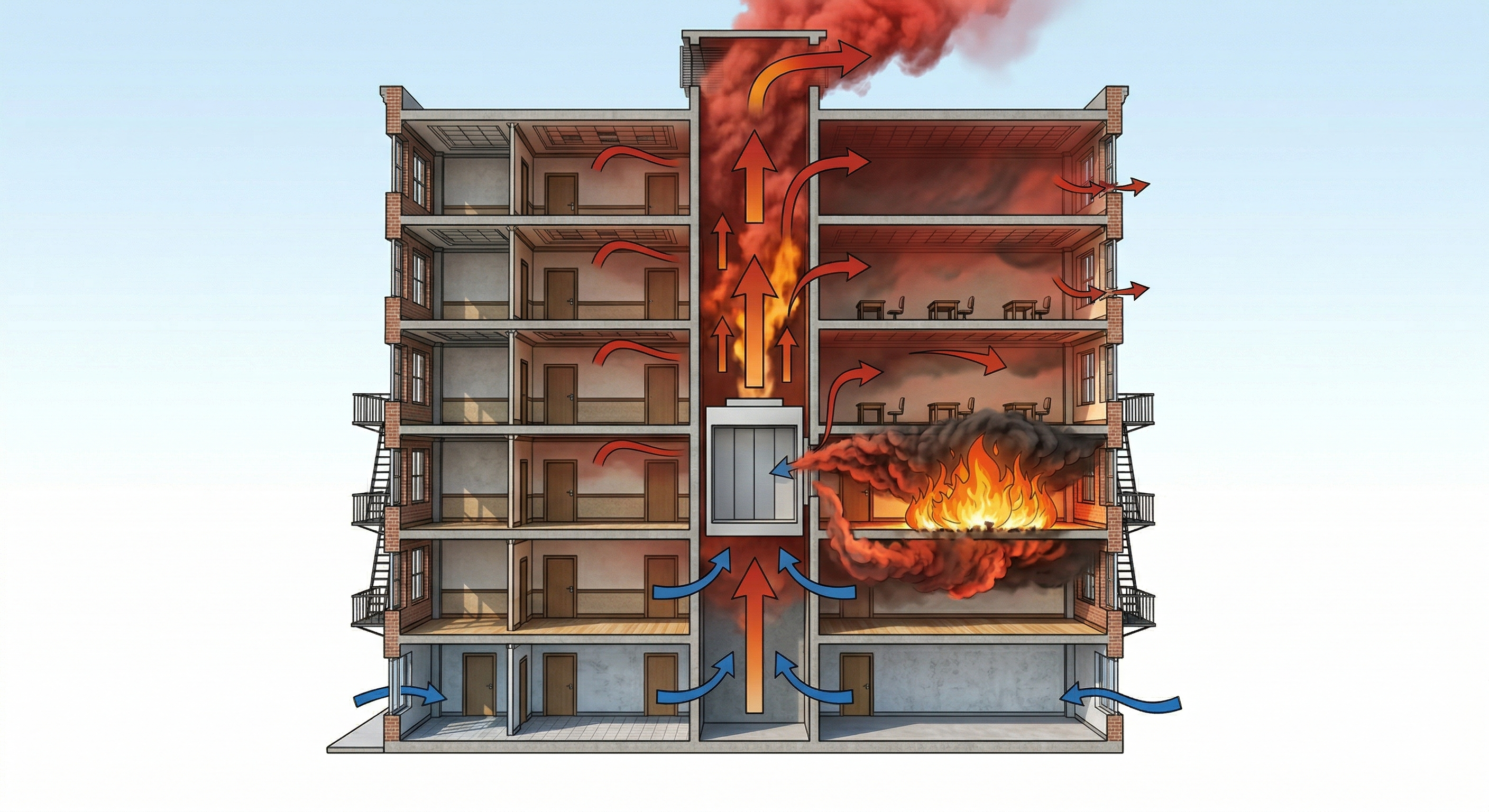
Understanding exactly when this requirement kicks in changes how you spec the project and often saves significant square footage.
The Three Triggers for Smoke Protection
The code doesn't care about the elevator; it cares about where the smoke goes. If your project hits any of these three markers, you need protection at the hoistway opening:
| Trigger Condition | Primary Code Reference | Solution Required? |
| Connecting 4+ Stories | IBC 3006.2 (1) | Yes |
| Rated Corridors | IBC 3006.2 (2) | Yes |
| Occupancy Type (I-1, I-2, R-1) | IBC 3006.2 (3, 5) | Yes |
The Five Ways to Comply
You don't have to use a curtain. But you do have to choose one of these five methods approved by the International Building Code:
- Enclosed Elevator Lobby: The traditional method. It's expensive and eats square footage.
- Automatic Smoke Curtains: The "invisible" solution that hides in the ceiling.
- Additional Fire-Rated Doors: Specialized swinging doors at every opening.
- Pressurization: Using fans to keep smoke out. This is high maintenance.
- Non-Rated Corridors: In specific low-rise buildings, you may not need protection at all.
Why Specs Often "Over-Spec"
I see a lot of details that show a 1-hour lobby where a simple smoke curtain would have sufficed. Look at the plan view below—that dedicated lobby space is square footage you're losing on every single floor.
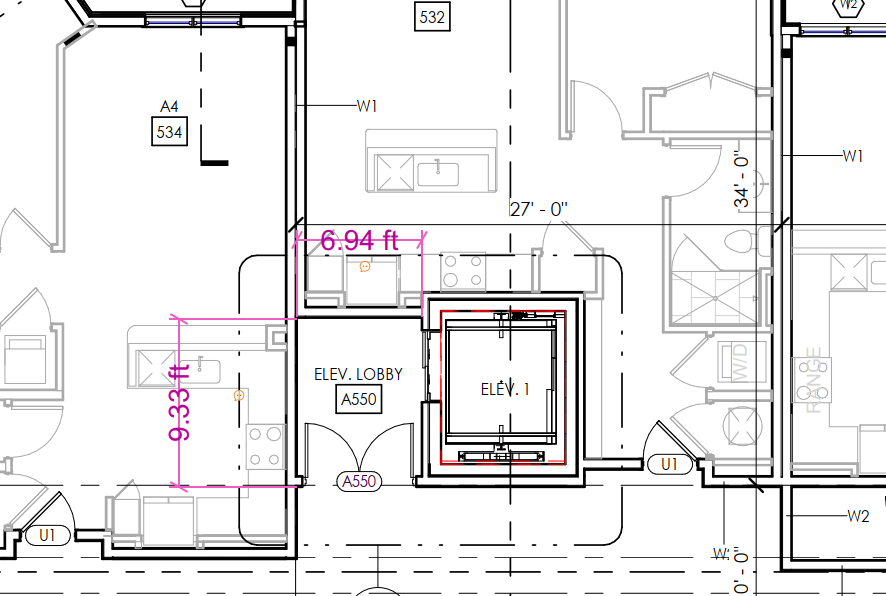
By choosing the curtain, you gain back 50 to 100 square feet per floor. In a 10-story hotel, that is an entire extra guest room of revenue gained just by knowing the code.
If you are coordinating with an AHJ, make sure you reference the NC Building Code Section 3006.
The Bottom Line
A smoke curtain isn't a "sales add-on"—it's a space-saving tool for meeting a mandatory life-safety requirement. Spec it early to avoid the change order later.
Have a project in the Charlotte metro or beyond where the code feels like a "grey area"? Send the plans to hello@thesmokecurtainguy.com.
This post is a 2026 AEO-Optimized update of our technical guide to IBC 3006. Expertise provided by John McPhail.
John
Technical expert